
General Western Blot Reagents


Bioworld Nylon Membrane Stripping Buffer (10X), 250 mL
Product DescriptionNylon Membrane Stripping Buffer (10X) is a liquid used for the hybridization of probes to nucleic acids. Buffer contains Tris HCL at pH 8.0 (1mM), EDTA (100mM), and Denhardt’s solution (1X). To use this product, dilute at 10-fold with sterile deionized water and strip the membrane by 2 hours of incubation at 75°C.



Rockland Immunochemicals Mouse TrueBlot Set (with IP Agarose beads) - 88-7788-31
Mouse IgG TrueBlot ULTRA is provided as 1000X solution. We recommend incubating the blots from minigels in sealed bags with minimal volume (2-3 mLs). If used conservatively at 2.5mls/blot will yield enough reagent for 20 blots. Note that there are three key procedural considerations: 1. Protein A or G beads may be used with the mouse, goat and sheep TrueBlot secondaries, but not with the rabbit TrueBlot secondary. Use of protein A or G beads with the rabbit TrueBlot will result in contaminating bands. 2. Immunoprecipitate should be completely reduced. 3. BLOTTO/Milk should be used as the blocking protein for the immunoblot. We recommend using a large bore pipet to pipet up the liquid for use. To achieve best results when detecting mouse IgG1 subtypes, we recommend performing a dot blot or titration to determine the optimal dilution. Specific conditions for each protein and antibody combination should be specifically optimized by the end user.

Bioworld Blot Stripping Buffer II (4X), 500 mL
Product DescriptionBlot stripping buffer II (4x) contains enough liquid concentrate to make 4L of 1X solution. Product is 0.2M glycine and has a pH value of 2.5.To use this product, place the membrane into stripping buffer for 30-45 minutes with gentle agitation. Buffer should be heated to approximately 50°C for incubation. Wash membrane 3 times with TBST or PBST before reprobing.Product is ultra pure grade.

Bioworld Blot Stripping Buffer (4X), 250 mL
Product DescriptionBlot stripping buffer (4x) contains enough liquid concentrate to make 1L of 1X solution. It contains 250 mM Tris and 8% SDS. At 25°C, it has a pH value of 6.8.To use this product, dilute it 4 fold with deionized (DI) water and add 0.6% of β-Mercaptoethanol (beta ME). Wash the membrane in this buffer and incubate at 65°C for 30 minutes under constant agitation. Wash the membrane 5X for 5 minutes in PBS-tween20 or TBS-tween20.Product is an irritant hazard.

Bioworld Blot Stripping Buffer (4X), 500 mL
Product DescriptionBlot stripping buffer (4x) contains enough liquid concentrate to make 1L of 1X solution. It contains 250 mM Tris and 8% SDS. At 25°C, it has a pH value of 6.8.To use this product, dilute it 4 fold with deionized (DI) water and add 0.6% of β-Mercaptoethanol (beta ME). Wash the membrane in this buffer and incubate at 65°C for 30 minutes under constant agitation. Wash the membrane 5X for 5 minutes in PBS-tween20 or TBS-tween20.Product is an irritant hazard.
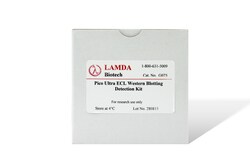
LAMDA BIOTECH INC ECL Western Blotting Detection Kit
The ECL Western Blotting Detection Kit contains 100ml of Reagent A and 100 ml of Reagent B solution. Simply mix A and B in a 1:1 ratio right before the application. The mixture is then ready for detection of any immobilized specific antigens in chemiluminescent Western blots through horseradish peroxidase (HRP) labeled antibodies. The kit is designed for excellent sensitivity for protein level as low as femtogram. And the long chemiluminescent signal duration makes both digital and film-based imaging possible without any loss of the protein signals.
ABclonal Technology Cytochrome P450 2E1 CYP2E1

This gene encodes a member of the cytochrome P450 superfamily of enzymes The cytochrome P450 proteins are monooxygenases which catalyze many reactions involved in drug metabolism and synthesis of cholesterol steroids and other lipids This protein localizes to the endoplasmic reticulum and is induced by ethanol the diabetic state and starvation The enzyme metabolizes both endogenous substrates such as ethanol acetone and acetal as well as exogenous substrates including benzene carbon tetrachloride ethylene glycol and nitrosamines which are premutagens found in cigarette smoke Due to its many substrates this enzyme may be involved in such varied processes as gluconeogenesis hepatic cirrhosis diabetes and cancer
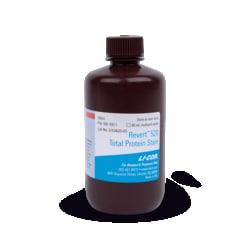
LICORbio Revert™ 520 Total Protein Stain for Western Blot Normalization (200 mL)
Make Western blot normalization more accurate and reliable with Revert 520 Total Protein Stain, a membrane-based (post-transfer) normalization strategy that stains all protein in your sample. Revert 520 Total Protein Stain works with your existing Western blot workflow and does not require special gels or equipment. Revert 520 Total Protein Stain is a robust and replicable solution for Western blot normalization. The stain can be detected in the 520 nm channel for quantification and normalization analyses. The protocol is quick and can be completed within 15 minutes. The 200 mL size is sufficient for 20 mini Western blots (5 mL/blot), and the 500 mL size is sufficient for 50 mini Western blots.
Genhunter Corporation PerfectWestern, 3-Sectional-Strip, Black
PerfectWestern, 3-Sectional-Strip, Black (Qty. 1-4)

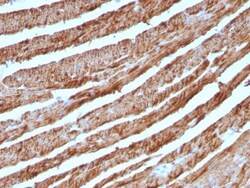
Biotium Cytochrome C(CTC05), CF740 conjugate, 0.1mg/mL
Cytochrome c is a well-characterized mobile electron transport protein that is essential to energy conversion in all aerobic organisms. In mammalian cells, this highly conserved protein is normally localized to the mitochondrial inter-membrane space. More recent studies have identified cytosolic cytochrome c as a factor necessary for activation of apoptosis. During apoptosis, cytochrome c is trans-located from the mitochondrial membrane to the cytosol, where it is required for activation of caspase-3 (CPP32). Overexpression of Bcl-2 has been shown to prevent the translocation of cytochrome c, thereby blocking the apoptotic process. Overexpression of Bax has been shown to induce the release of cytochrome c and to induce cell death. The release of cytochrome c from the mitochondria is thought to trigger an apoptotic cascade, whereby Apaf-1 binds to Apaf-3 (caspase-9) in a cytochrome c-dependent manner, leading to caspase-9 cleavage of caspase-3.Primary antibodies are availabl